Main Program
To authors: Both regular and dataset/tool paper presentations are 20 minutes in total (including 5 minutes Q&A).
June 23 - June 24 - June 25
June 23
Room: Conference Room 1.801
Welcome
8:40-9:00
Keynote 1
9:00-10:00
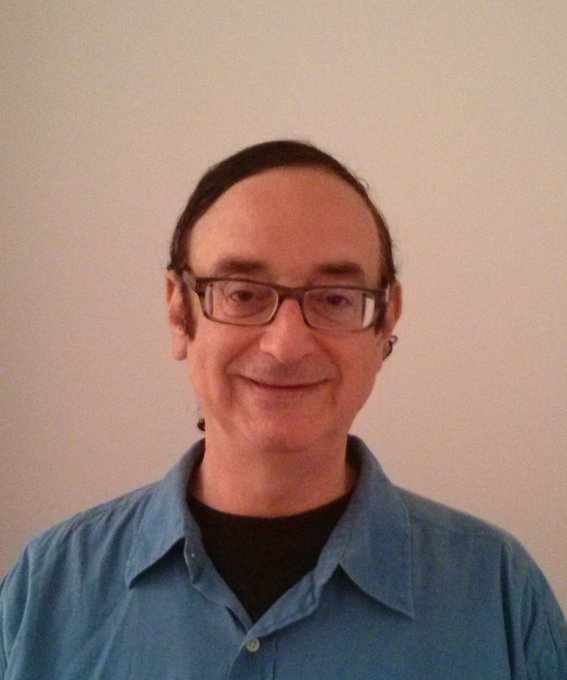
30+ Years of Malicious Cryptography
Moti Yung, Google and Columbia University
Abstract
Cryptography has been used both, historically and in modern times, as a tool to protect and authenticate information: encryption of messages and storage, and protecting information in usage as well. For the last 30+ years, the notion of Malicious Cryptography has been developed and evolved. The idea behind the notion is that when a cryptographic system is implemented in a larger system, then it can be repurposed to perform tasks beyond its specified goals. Repurposing means that the system’s goal as specified, and algorithms as designed to adhere to the specification, change covertly to achieve extended goals, originally involving service of malicious activity. The notion and various subareas of malicious cryptography, call for revision of the relationships of model and specifications of cryptographic systems on the one hand, and their implementations and proof of correctness and security, on the other hand.
Short Bio
Moti Yung is a Distinguished Research Scientist with Google, and a Senior Adjunct Research Faculty Member in the Computer Science Department at Columbia University. He received his PhD from Columbia University in 1988. Previously, he worked at IBM Research, CertCo/Bankers Trust, RSA Laboratories (EMC), and Snap. He is a Fellow of IEEE, ACM, IACR, and EATCS, and his research interests focus on security, privacy, and cryptography.
Coffee Break
10:00-10:20
Session 1: Access Control
10:20-11:40
Puneet Gill (University of Waterloo), Mahesh Tripunitara (University of Waterloo).
Sudip Maitra (Virginia Tech), Kenechukwu Nwodo (Virginia Tech), Tolga Atalay (A2 Labs), Angelos Stavrou (Virginia Tech, A2 Labs), Haining Wang (Virginia Tech).
Mete Harun Akcay (Nokia Bell Labs & Åbo University), Buse Gul Atli (Linköping University & Nokia Bell Labs), Siddharth Prakash Rao (Nokia Bell Labs), Alexandros Bakas (Nokia Bell Labs).
Ferhat Demirkiran (University at Albany), Amir Masoumzadeh (University at Albany - SUNY).
Lunch (on your own)
11:40-13:00
Session 2: Privacy-Preserving Techniques
13:00-14:20
Younas Khan (University of Rovira i Virgili), Anna Monreale (University of Pisa), Carlo Metta (University of Pisa), David Sanchez (University of Rovira i Virgili), Josep Domingo-Ferrer (University of Rovira i Virgili).
Mary Dhooghe (University of Texas at Dallas), Murat Kantarcioglu (Virginia Tech), Bhavani Thuraisingham (University of Texas at Dallas).
Marc Damie (University of Twente), Florian Hahn (University of Twente), Andreas Peter (Carl von Ossietzky Universität Oldenburg), Jan Ramon (Inria).
Mindaugas Budzys (Tampere University), Bin Liu (Tampere University), Antonis Michalas (Tampere University).
Coffee Break
14:20-14:40
Session 3: (In)secure Software
14:40-16:00
Yijun Yuan (University of Pittsburgh), Na Du (University of Pittsburgh), Adam J. Lee (University of Pittsburgh), Balaji Palanisamy (University of Pittsburgh).
Jinghang Wen (City University of Hong Kong), Qingchuan Zhao (City University of Hong Kong).
Ruining Yang (Stony Brook University), Narong Chaiwut (Stony Brook University), Nick Nikiforakis (Stony Brook University).
Kotaiba Alachkar (TU Delft), Dirk Gaastra (Independent Researcher), Olga Gadyatskaya (Leiden University), Eduardo Barbaro (TU Delft), Michel Van Eeten (TU Delft), Yury Zhauniarovich (TU Delft).
Social Event
19:00
June 24
Room: Conference Room 1.801
Keynote 2
9:00-10:00
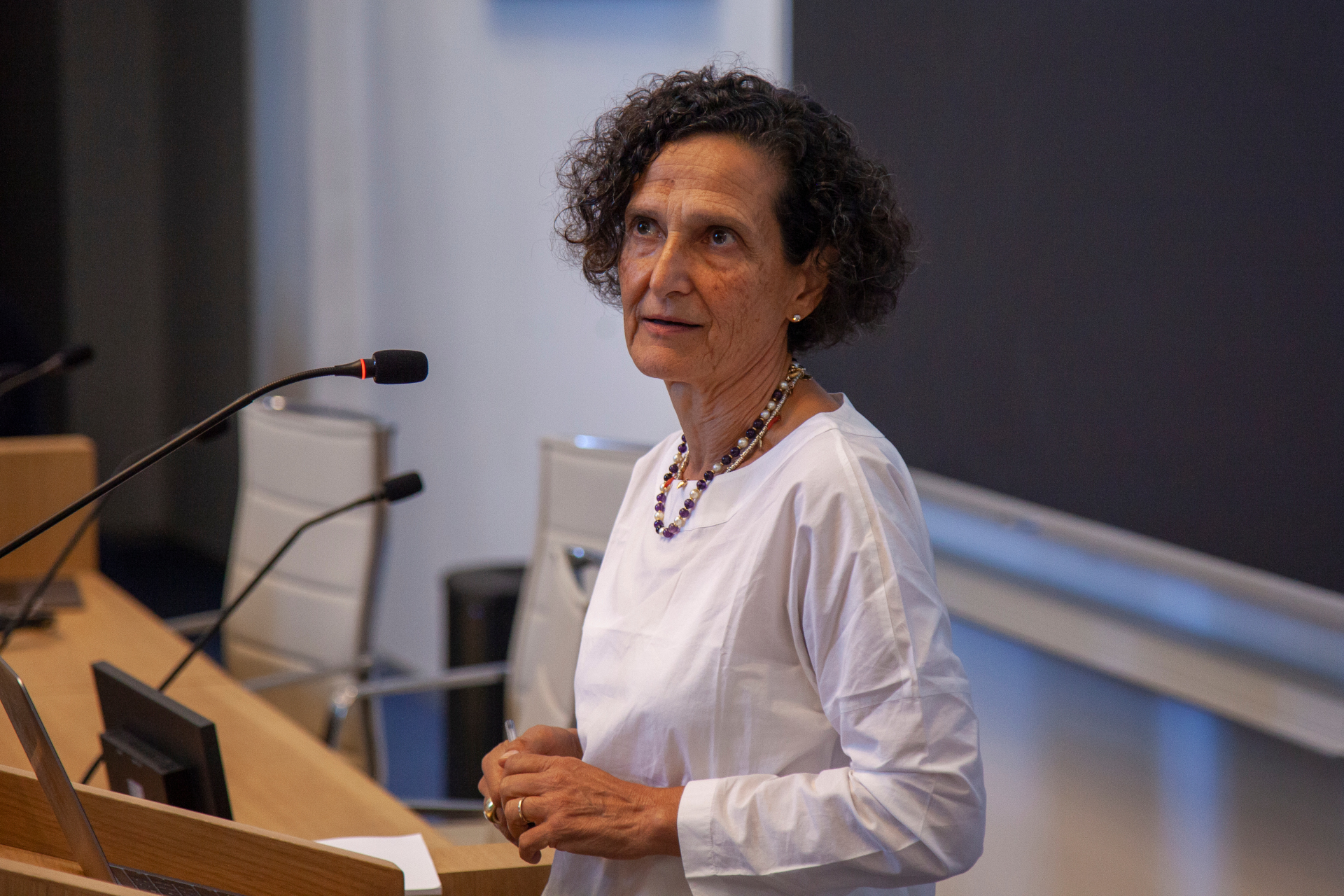
The Ethical Dimension of Privacy in the Digital Space
Paola Inverardi, Gran Sasso Science Institute
Abstract
The world we inhabit is increasingly shaped and structured by digital technologies that act autonomously, both on our behalf and to fulfill our needs. This transformation raises profound ethical concerns about the potential impact of interactions between humans and autonomous systems on the values underpinning our societies. Over the past decades, the implications of digital technologies for privacy have been widely examined from both technical and regulatory perspectives. Yet privacy, unlike security, is fundamentally an ethical notion: it concerns the individual's right to retain meaningful control over personal information. This perspective calls for a shift in how we design and deploy technology towards systems that actively empower individuals to protect and manage their privacy in digital environments. In this talk, I will discuss selected technologies and approaches that embody this vision, highlighting the key research directions and technical challenges involved in developing privacy-preserving solutions that place individuals at the center.
Short Bio
Paola Inverardi is Rector of Gran Sasso Science Institute since September 2022. Before she was a professor of Computer Science and rector at the University of L’Aquila. Paola Inverardi's research focuses on software architectures, mobile applications, and adaptive and autonomous systems. Currently, her research focuses on the ethics of autonomous systems, with a particular emphasis on their interactions with society and human beings. Inverardi served on the editorial boards of IEEE, ACM, Springer and Elsevier Journals. She has served as general or program chair of leading software engineering conferences (e.g., ASE, ICSE, ESEC/FSE) and as chair of the ICSE and ESEC Steering Committees. She has received honorary doctorates from Mälardalen University in Sweden and Shibaura Institute of Technology in Tokyo, Japan. She is an ACM Fellow and has received the 2013 IEEE TCSE Distinguished Service Award.
Coffee Break
10:00-10:20
Session 4: Security in the Era of AI
10:20-11:20
Xiang Li (Fordham University), Pin-Yu Chen (IBM Research), Wenqi Wei (Fordham University).
Qiyang Sun (University of Southampton), Erisa Karafili (University of Southampton).
Aravind Cheruvu (Virginia Tech), Shravya Kanchi (Virginia Tech), Sifat Muhammad Abdullah (Virginia Tech), Nicholas Ka-Shing Kong (Virginia Tech), Daphne Yao (Virginia Tech), Murtuza Jadliwala (The University of Texas at San Antonio), Bimal Viswanath (Virginia Tech).
Lunch (on your own)
11:40-13:00
Session 5: Data Privacy
13:00-14:20
Shantanu Sharma (New Jersey Institute of Technology), Ethan Myers (Colorado State University), Lorenzo De Carli (University of Calgary), Ritwik Banerjee (Stony Brooks University), Indrakshi Ray (Colorado State University).
Robert Blacha (New Jersey Institute of Technology), Yossi Oren (Ben-Gurion University of the Negev), Reza Curtmola (New Jersey Institute of Technology).
Marc Roßberger (University of Regensburg), Dogan Kesdogan (University of Regensburg).
Cagdas Parlak (Boğaziçi University), Dicle Ceylan (Yıldız Technical University), Berkay Kemal Balioglu (Koç University), Alireza Khodaie (Koç University), Emre Gursoy (Koç University).
Coffee Break
14:20-14:40
Session 6: Software Security
14:40-16:00
Lukas Seidel (Binarly, Inc. & TU Berlin), Sam Thomas (Binarly, Inc.), Konrad Rieck (TU Berlin & BIFOLD).
Li Zhou (KAUST), Marc Dacier (KAUST), Charalambos Konstantinou (KAUST).
Sun Hyoung Kim (Rebellions Inc), Dongrui Zeng (Palo Alto Networks, Inc.), Monika Santra (The Pennsylvania State University), Gang Tan (The Pennsylvania State University).
Arina Kudriavtseva (Leiden University), Olga Gadyatskaya (Leiden University).
June 25
Room: Conference Room 1.801
Session 7: AI for Security
8:40-10:20
Parsa Memarzadehsaghezi (Ontario Tech University), Pooria Madani (Ontario Tech University), Khalil El-Khatib (Ontario Tech University).
Emir Karaosman (University of Liechtenstein), Advije Rizvani (University of Liechtenstein), Irdin Pekaric (University of Liechtenstein).
Marc-Antoine Faillon (Polytechnique Montreal), Julien Francq (Naval Group, Naval Cyber Laboratory, 199 Av. Pierre-Gilles de Gennes, 83190 Ollioules France), Nora Boulahia-Cuppens (Polytechnique Montreal), Frédéric Cuppens (Polytechnique Montreal), Reda Yaich (IRT SystemX).
Siwei Zhang (Syracuse University), Endadul Hoque (Syracuse University).
Nguyen Khanh Son (University of Insubria), Christian Rondanini (University of Insubria), Barbara Carminati (University of Insubria), Elena Ferrari (University of Insubria).
Coffee Break
10:20-10:40
Session 8: Web Security
10:40-11:40
Murat Sekmen (Istanbul Technical University), Kemal Bicakci (Istanbul Technical University).
Ethan Thompson (Carleton University), Ali Sadeghi Jahromi (Carleton University), AbdelRahman Abdou (Carleton University).
Chongwen Ma (University of Nottingham Ningbo China), Yuan Cheng (University of Nottingham Ningbo China).